

EDUCATORS FOR HUMANITY IN COLLABORATION WITH THE PALESTINIAN SOLIDARITY ALLIANCE
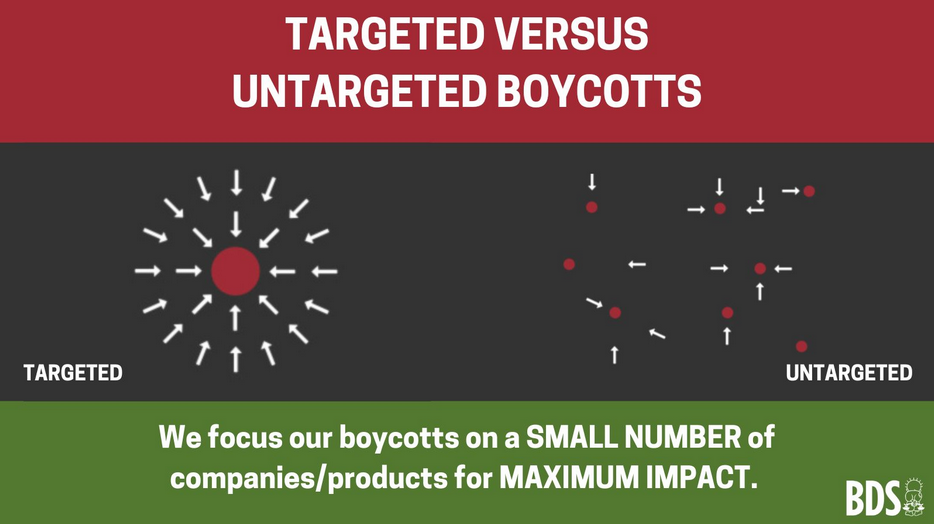
South Africans know too well the pain of apartheid. We know the power of global boycotts. During our struggle, the world stood by us. Today, Palestinians are asking for the same. A targeted boycott is a strategic action that focuses on specific companies, institutions, or products that are complicit in human rights violations. In the case of the Palestinian struggle, targeted boycotts are part of the broader international movement known as BDS (Boycott, Divestment and Sanctions)
What is BDS?
Boycott– Withdrawing support from companies and institutions involved in Israel’s oppression towards Palestinians.
Divestment– To urge governments, universities as well as pension funds to pull investments from companies that is complicit in Israeli apartheid.
Sanctions– Holding campaigns and calling upon government to ban Israeli goods that are produced in illegal settlements.
We stand with the BDS movement which calls for targeted boycotts.
Why targeted boycotts work?
- They are specific and evidence based.
- They expose injustice.
- They focus pressure on companies which affects their profits.
Brands and companies to boycott
McDonalds Israel have provided free meals to Israeli soldiers.
In October 2023, during Israel’s assault on Gaza, McDonalds Israel operated by the Alonyal ltd franchise publicly announced that it is donating thousands of free meals to Israeli soldiers. The franchise boasted about 100 000 free meals to the IDF. Many South Africans have joined the boycott of McDonalds because of its indirect complicity in Israel’s war on Gaza and failure to distance itself from its Israeli franchise’ support of the IDF. As South Africans, we have a moral responsibility to say: “We will not fund war. We will not eat under apartheid. We choose justice.”
What can you do?
- Stop buying from McDonalds.
- Educate your family and friends.
- Support your local restaurants.
- Choose ethical alternatives such as: Mochachos; Chicken Licken; Nandos.
Coca-Cola’s complicity in Israel’s illegal occupation of Palestine.
The company’s operations in Atarot, an illegal Israeli
settlement in occupied East Jerusalem, directly contributes to the oppression of Palestinians. Here’s a breakdown of Coca- Cola’s role and why the boycott is crucial: Coca-Cola’s Factory in Atarot (Occupied East Jerusalem)
Atarot is an illegal Israeli settlement built on stolen Palestinian land after Israel’s occupation in 1967. The Coca-Cola factory there operates on dispossessed Palestinian land, normalizing and economically sustaining Israel’s illegal settlement enterprise. International law (UN resolutions, Fourth Geneva Convention) explicitly prohibits economic activity in occupied territories, making Coca-Cola’s presence a violation.
How Coca-Cola Supports Israeli Apartheid & Occupation
Economic Endorsement: By operating in Atarot, Coca-Cola helps fund Israel’s settlement economy, which relies on land theft, displacement, and apartheid policies.
Silence on Oppression: Despite global condemnation of Israeli settlements, Coca-Cola refuses to withdraw, showing complicity in human rights abuses.
Franchise Model: Coca-Cola licenses its brand to Central Bottling Company (CBC), an Israeli firm that runs the Atarot plant. This allows Coca-Cola to distance itself legally while still profiting.
Coca-Cola’s Hypocrisy
Coca-Cola claims to support “human rights” and “community values,” yet it ignores Palestinian suffering. The company has pulled out of Russia over Ukraine but refuses to leave occupied Palestine, exposing its double standards.
Full List of Coca-Cola Brands to Boycott
To maximize impact, avoid all Coca-Cola-owned products, including:
- Coca-Cola, Diet Coke, Coke Zero
- Fanta, Sprite, Schweppes, Spar Letta
- Smartwater, Vitaminwater
- Cappy Juice, Appletiser
- Powerade
- Costa Coffee (owned by Coca-Cola)
- Bonaqua ,Valpre
What Can you do?
- Stop buying Coca-Cola products and educate others.
- Support ethical alternatives (e.g., Kingsley, Bashews, Palestine Cola, Salaam Cola).
- Pressure supermarkets & restaurants to drop Coca-Cola.
Clover Industries is one of South Africa’s leading dairy and beverage companies, known for its range of milk, cheese, yoghurt, butter, juices, and other consumer goods. Established over a century ago, it became a household brand and a symbol of local food production.
However, in 2019, Clover became the focus of national and
international attention when it was acquired by a foreign consortium with direct links to Israel. A move that sparked widespread controversy, resistance, and ongoing calls for boycott.
The Takeover: Milco SA and the Israeli Link
In 2019, a consortium known as Milco SA successfully acquired a majority stake (59.5%) in Clover Industries for approximately R4.8 billion. Milco SA is controlled by the Central Bottling Company (CBC), an Israeli firm that bottles Coca-Cola and owns several food and beverage brands in Israel.
Who is CBC (Central Bottling Company)?
CBC is a large Israeli beverage and food group.
It has operations in illegal Israeli settlements located in the occupied Palestinian territories, including the West Bank. The United Nations has identified CBC as one of the companies contributing to human rights violations by operating in occupied areas, which are considered illegal under international law. By purchasing from Clover, South Africans are directly funding a company that profits from occupation, apartheid, and settler colonialism.
Clover-owned or affiliated brands include:
- Clover milk, butter, cheese, yoghurt
- Tropika
- Aquartz
- Manhattan Ice Tea
- Clover Classic
- Super M
- Butro
- Krush
- Danone
What can you do?
- Stop buying clover products.
- Pressure local supermarkets to stop stocking clover products.
- Support ethical alternatives such as: (Douglasdale; Sundale and Woodlands Dairy)
K-way in South Africa is the flagship brand of Cape Union Mart, a major local retail chain focused on outdoor clothing and gear. Founded in Cape Town in 1981 by Philip Krawitz; Cape Union Mart owns several brands including Old Khaki; Poetry; Tread + Miller; Sparks & Ellis all under the same ownership group as K-way.
Philip Krawitz the owner of Cape Union Mart(K-way), received the Yakir Keren Hayesod award in 2015, recognizing his significant fundraising for Israel. Krawitz donates substantial funds from the profits of Cape Union Mart. Krawitz’ fundraising connects Cape Union Mart to Israels military actions, making purchases a form of indirect complicity. As a popular youth brand in South Africa K-way offers a strategic target for
consumer-based protests
What can you do?
- Avoid shopping at K-way and associated brands.
- Choose local alternatives such as Outdoor warehouse.
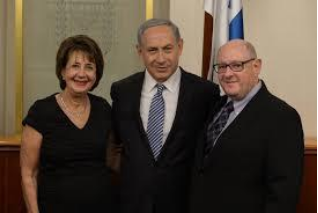
Philip Krawitz, owner of K WAY, standing next to Israelis Prime Minister Benjamin Netanyahu who has ordered the genocide in Gaza This is more than a boycott This is about solidarity Stand on the right side of History
Reference List
BDS Movement. (n.d.). What is BDS? https://bdsmovement.net
International Committee of the Red Cross. (1949). Geneva Convention (IV) relative to the Protection of Civilian Persons in Time of War, Article 49. https://ihl-databases.icrc.org/applic/ihl/ihl.nsf/Article.xsp?action=openDocument&documentId=AE2D3983
52C5B028C12563CD00516233
Keren Hayesod. (2015). Annual report 2015. www.kerenhayesod.org
Mail & Guardian. (2019). Clover boycott: Milco SA and CBC involvement. https://mg.co.za
Middle East Eye. (2023, October). McDonald’s Israel donates free meals to IDF during Gaza assault. https://www.middleeasteye.net/news
Office of the United Nations High Commissioner for Human Rights. (2020, February). Database of companies operating in Israeli settlements in the Occupied Palestinian Territory.
https://www.ohchr.org/en/press-releases/2020/02
United Nations Security Council. (2016). Resolution 2334 (2016).
https://www.un.org/webcast/pdfs/SRES2334-2016.pdf
WhoProfits. (n.d.). Central Bottling Company (CBC) – Coca-Cola Israel.
https://www.whoprofits.org/company/central-bottling-company-cbc-coca-cola-israel/
Leave a Reply