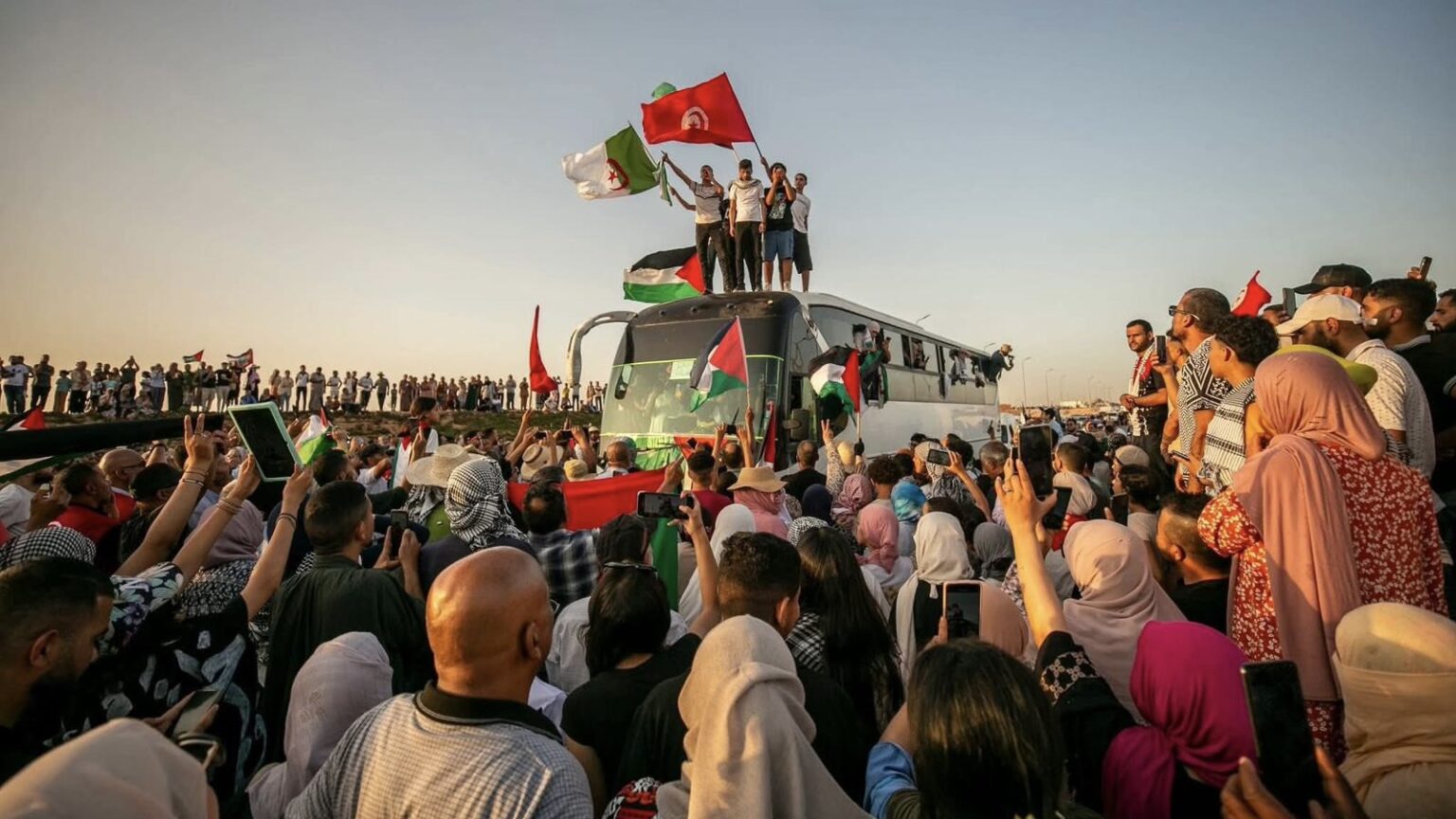

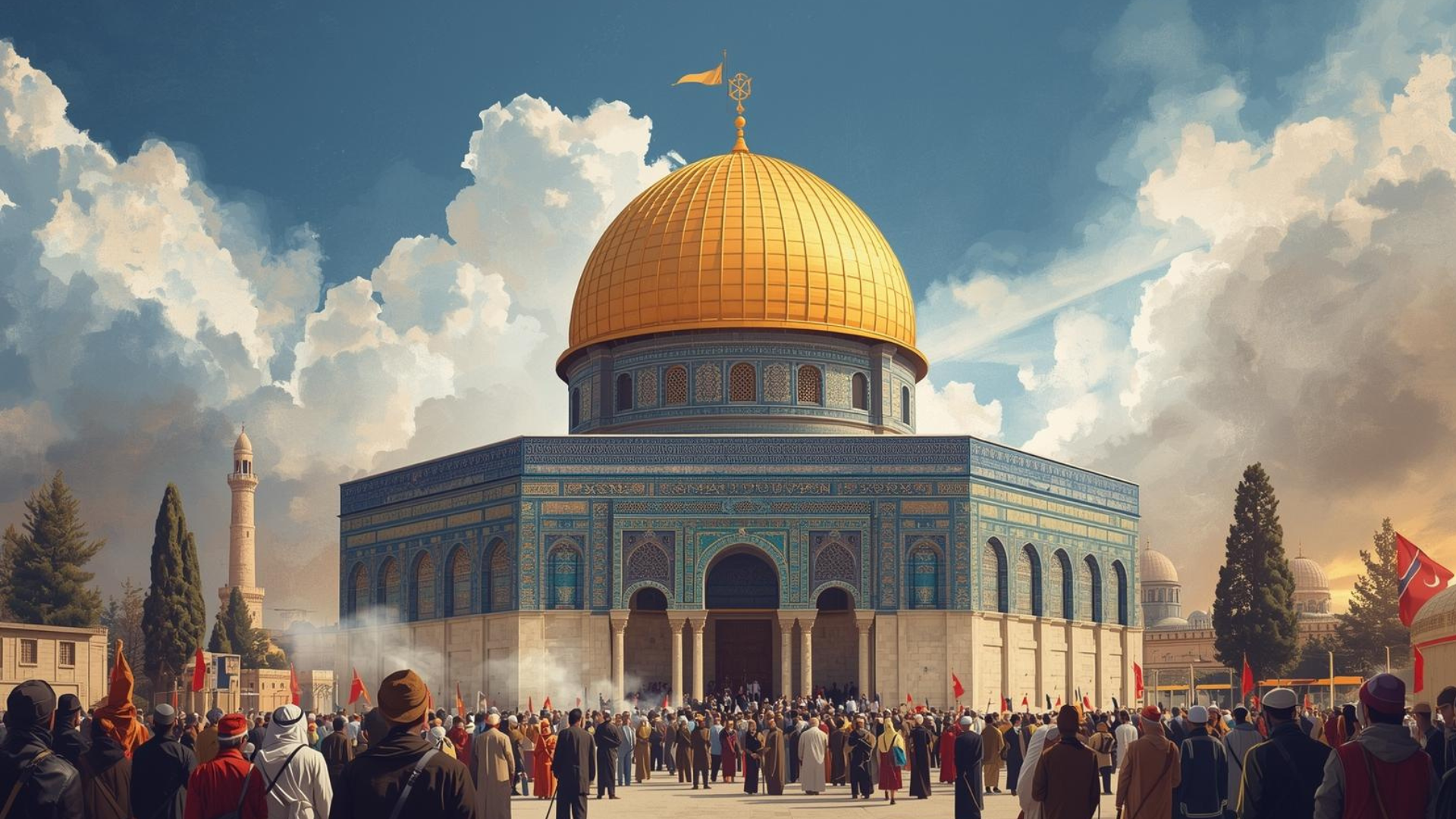
The Siege of the Sanctuary: Why Defending Al-Aqsa is Defending Islam Itself
“Exalted is He who took His Servant by night from al-Masjid al-Haram to al-Masjid al-Aqsa, whose surroundings We have blessed, to show him of Our signs. Indeed, He is the Hearing, the Seeing.” (Qur’an, 17:1)
In this sacred month of Ramadan, as Muslims around the world turn their faces in prayer towards the Qibla, their hearts remain fixed on a different sanctuary—Masjid Al-Aqsa, the first Qibla of Islam, the destination of the Prophet’s night journey, and the third holiest site in our faith. Yet today, that sanctuary is under siege.
Its courtyards, which should echo with the footsteps of worshippers heading for Taraweeh prayer, are patrolled by military police. Its gates, which should swing open to welcome the faithful for I’tikaf, are locked by occupation forces. And the Muslim call to prayer, the Adhan, is being answered by the sound of stun grenades.
This is not a security measure. This is not a political dispute. This is an act of war against Islam itself.
The Sanctuary Under Attack
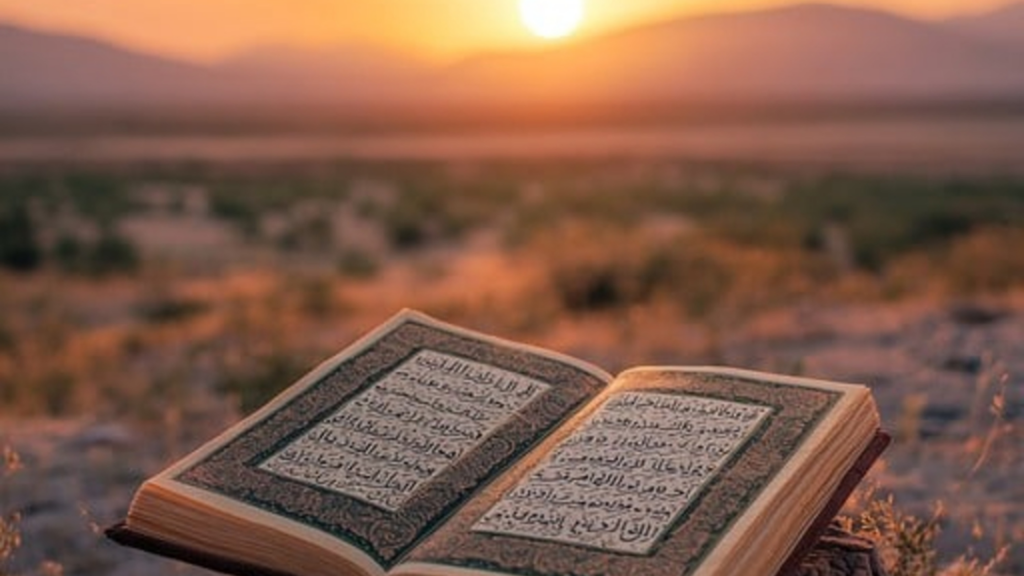
On Saturday, 28 February 2026, Israeli occupation forces stormed Masjid Al-Aqsa, expelled worshippers, and announced its indefinite closure under the guise of “wartime precautionary measures.” Within one hour of the American-Israeli aggression against Iran, the order came down. The Ibrahimi Mosque in Al-Khalil was also shuttered. Within hours, the Islamic world was cut off from its sanctuary during the most sacred days of the year.
Let us be clear about what this means. Muslims are being prevented from praying in their own mosque during Ramadan—the month in which the Qur’an was revealed. They are being barred from the very site from which the Prophet Muhammad (peace be upon him) ascended to the heavens on the night of Al-Isra’ wal-Mi’raj. The spiritual heart of millions is being deliberately and systematically crushed.
The justification offered—that this closure protects Palestinian worshippers—is an obscenity. Nearly 46% of Palestinians in the territories occupied in 1948 have no access to air-raid shelters.
Palestinians in the West Bank and East Jerusalem lack public protective infrastructure entirely. To lock worshippers out of their sanctuary while leaving them exposed in their homes, markets, and streets is not protection. It is punishment. It is ethnic cleansing by other means.
After the genocidal war on Gaza—after more than 50,000 martyrs, after entire neighbourhoods reduced to rubble, after children pulled from the rubble of their homes—any claim that Israel acts out of concern for Palestinian safety rings hollow. Indeed, it is laughable. But the laughter catches in our throats when we see what is really happening.
A Millennium of History, Erased in Moments
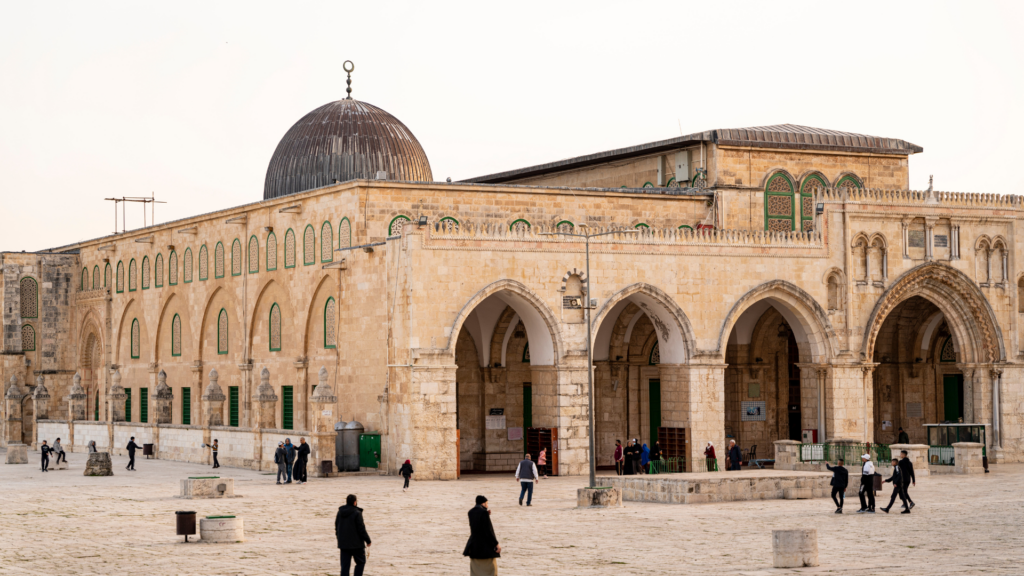
To understand what is being lost, we must understand what Al-Aqsa has always been.
Throughout history, the Blessed Al-Aqsa Mosque has never been merely a building where prayers are performed. It has been the heart of the legal and historical Status Quo system that regulated the relationship between all holy sites of Jerusalem. This system, which took shape over centuries—from the Ottoman era through the British Mandate and the period of Jordanian administration—was not a temporary arrangement. It was an integrated legal and spiritual framework that maintained a delicate balance between the Islamic and
Christian holy places in the Holy City.
This balance rested on a clear principle: Al-Aqsa Mosque is an exclusive place of worship for Muslims, administered by the Islamic Waqf under the Hashemite custodianship. Christian holy sites maintained their religious and historical rights according to the same arrangements. Together, they formed what history knows as the Status Quo—a system that preserved Jerusalem’s character for generation after generation.
When those who possess the natural and religious right to access their mosque are prevented from doing so, we are not merely witnessing a violation of freedom of worship. We are witnessing the dismantling of a centuries-old legal order. The question being asked, in the most brutal terms, is this: Who holds the authority over Al-Aqsa Mosque? Who has the power to open it or close it?
History and international agreements provide the answer: the Islamic Waqf, under Hashemite custodianship. But the occupation forces have made their answer clear: they do. And they are enforcing that answer with military police, with tear gas, with locked gates and closed doors.
The danger of what we are witnessing today does not lie only in the infringement upon the Waqf’s powers or in restricting Muslims’ right to pray. The danger is far deeper. Recent history shows that changes in Al-Aqsa have rarely occurred suddenly. They have unfolded through a gradual policy that transforms temporary measures into permanent realities. It begins with “security measures.” It becomes fixed restrictions. New arrangements are built upon them. And slowly, inexorably, the nature of the place changes.
Since 1967, Al-Aqsa has passed through several pivotal stages: when security control was transferred to Israeli police; when incursions into the mosque became a politically protected phenomenon; and now, in these years, when we witness increasing attempts to impose a new reality based on reducing the Islamic presence and opening the door to other religious rituals within the mosque.
Preventing Muslims from praying is not an isolated detail. It is another link in a chain aimed at reshaping Al-Aqsa entirely.
The Myth of the Temple
This assault does not occur in a vacuum. It is driven by an ideology that must be named and confronted.
Within the Israeli government and the broader Zionist right, a movement of Religious Zionism has gained increasing influence. This worldview treats Al-Aqsa not as a Muslim sanctuary but as the site of a future “Temple.” The Ibrahimi Mosque in Al-Khalil is reframed as the “Cave of Machpelah.” This is not a matter of semantics. It is a project of religious replacement—an attempt to displace the existing Islamic reality of these sacred spaces and replace it with a mythical, exclusivist narrative.
The “Temple” for which some wait has no historical standing in the physical reality of Al-Aqsa. It is a theological construct, a matter of faith for some, but it has no claim that supersedes the living, breathing, praying reality of millions of Muslims who have filled this sanctuary for over a millennium. The attempt to impose this myth through military force, through administrative closures, through settler incursions and police brutality, is not an act of faith. It is an act of war.
And it is being enabled by the most powerful nation on earth.
The Crusader Alliance
We must speak frankly about what is happening at the highest levels of global power.
The current American administration has surrounded itself with figures who view the conflict in the Middle East not as a political struggle but as a religious prophecy. The U.S. Defence Secretary bears tattoos of the Jerusalem Cross—the symbol of the Crusader Kingdom—and the Crusader slogan “Deus Vult” (“God wills it”) inked on his body.
Evangelical pastors gather in the Oval Office to lay hands on the President and pray for “angelic reinforcements” to secure victory in war. American soldiers report being told by their commanders that the war against Iran aims to trigger the “resurrection” described in the Book of Revelation.
This is not diplomacy. This is not geopolitics. This is a doctrine of religious war, and its target is the Muslim world.
When Lindsey Graham declares that the United States will determine the course of the Middle East for a thousand years, when George W. Bush invokes the word “crusade” and then retreats from it, when military briefings cite biblical prophecy—we are witnessing the marriage of American empire with Zionist expansionism, consecrated by Christian fundamentalism.
And the bride-price being paid is Al-Aqsa.
The Rising Tide of Islamophobia: Religious Bigotry Disguised as Policy
What we are witnessing in Jerusalem cannot be separated from a global phenomenon that has reached crisis proportions: the dramatic rise of Islamophobia, which is nothing less than religious bigotry and racism masquerading as policy.
Across the Western world, Muslims face a coordinated assault on their identity, their places of worship, and their very right to exist with dignity. Mosques are vandalized. Women in hijab are attacked in the streets. Muslim community centres are surveilled. And in government after government, hostility to Islam has become a political credential rather than a disqualification.
In the United States, we have seen the resurgence of rhetoric that dehumanizes Muslims, that frames them as a security threat, that questions their loyalty to the nations they call home. The same administration that prays with Evangelical pastors for “angelic reinforcements” in war has overseen policies that target Muslim communities for special scrutiny, that amplify Islamophobic narratives, and that empower figures who have built careers on hatred of Islam.
In Europe, the pattern repeats: bans on Islamic dress, closures of mosques under flimsy pretexts, political parties that campaign on anti-Muslim platforms and enter government with those platforms intact. The message is clear: Islam is not welcome. Muslims do not belong.
And in Palestine, this global Islamophobia finds its most brutal expression. There, the bigotry is not confined to rhetoric or policy—it is enforced with military occupation, with checkpoints and closures, with soldiers who storm mosques and beat worshippers. The same hatred that defaces a mosque in Paris or London sends settlers into Al-Aqsa with police protection.
This is not a coincidence. It is a coordinated ideology. The Religious Zionists who seek to build a Temple on the ruins of Al-Aqsa, the Evangelical Christians who see war in the Middle East as a prophecy to be fulfilled, the Islamophobic politicians who win elections by stoking fear of Muslims—they are all part of the same movement. They all share the same goal: the erasure of Islam from public life, from sacred space, from the world.
Make no mistake: Islamophobia is racism. It targets a people based on their faith, but it operates through the same mechanisms as every other form of bigotry. It dehumanizes. It excludes. It justifies violence. And when it is given the power of the state, as it has been in Israel and as it increasingly is in the West, it becomes a tool of oppression.
The closure of Al-Aqsa is Islamophobia made manifest. It is the logical conclusion of a worldview that says Muslims have no right to their own holy places, that Muslim lives are disposable, that Muslim prayer is a threat to be suppressed.
If we do not name this for what it is—if we do not recognize that the attack on Al-Aqsa is part of a global attack on Muslim existence—we will lose more than a sanctuary. We will lose the battle for the very principle that all people have the right to worship, to gather, to exist without fear.
The Gateway to War or the Doorway to Peace
As Kamal Khatib of the Islamic Movement in Palestine has warned:
“Whatever the rounds and arenas of this war may be—its beginnings, its endings, and even its very trigger—are tied to what is happening in the Palestinian arena in general, and in Masjid al-Aqsa in particular. Here lies the gateway to war, or the doorway to peace.”
These words carry the weight of prophecy. Al-Aqsa has always been the barometer. When it is respected, when its sanctity is honoured when Muslims pray in peace, Jerusalem breathes. When it is violated, when settlers storm its courtyards, when worshippers are beaten and expelled, the fire spreads. It spreads from Jerusalem to the West Bank. It spreads from Gaza to the occupied territories. It spreads across the Muslim world, igniting hearts that can bear much but cannot bear the desecration of what they hold most sacred.
We have seen this before. In 1929, when Jewish settlers performed religious rituals at Al-Aqsa, the first popular protests erupted. In 1969, when an Australian settler set fire to the mosque, burning 1500 square metres, and destroying priceless artefacts and Qur’ans, thousands rose in defence of their sanctuary. In 2000, when Ariel Sharon entered the compound, the Second Intifada exploded. In 2022, when Israeli forces stormed the mosque during Ramadan, beating worshippers and arresting hundreds, the spark leapt from Palestine to the entire region.
And now, in 2026, the gates are locked. The worshippers are barred. The sanctuary is silent—not because Muslims have abandoned it, but because military force has seized it.
The world watches. And the world must choose: gateway to war, or doorway to peace?
What Is at Stake: All Holy Sites
The implications of this assault do not stop at Al-Aqsa. They extend to every holy site in Jerusalem.
The historical system regulating the city’s sanctuaries was never confined to a single location. It was an integrated framework governing the relationship among all Islamic and Christian holy places. Churches, monasteries, and Christian endowments in Jerusalem have been protected within the same framework that protected Al-Aqsa—a framework that prevented any party from changing the existing religious reality or imposing new arrangements by force
If this system is now being dismantled at Al-Aqsa, the message being sent is clear: this framework is no longer binding. The door has been opened to potential changes that could one day affect every holy site in the city.
The Church of the Holy Sepulchre. The Chapel of the Ascension. The Monastery of the Cross. All of them rest on the same foundation. When that foundation cracks at Al-Aqsa, every structure built upon it trembles.
For this reason, defending Al-Aqsa is not merely an Islamic issue. It is a defence of the entire system of balances that has preserved the religious and historical character of Jerusalem for centuries. When one pillar of this system begins to crack, the rest become vulnerable to pressure and transformation.
The Hashemite custodianship, which for decades has been the cornerstone in protecting this system, now faces a new historical test. This custodianship has never been merely a political or symbolic title. It has been a practical framework for managing the Islamic Waqf, maintaining Al-Aqsa, and safeguarding its religious identity. Any infringement upon the authority of the Waqf, any bypassing of its role, undermines the foundation upon which this custodianship was built.
Jerusalem is not an ordinary city whose affairs can be reorganized through administrative or security decisions. It is a city whose relationship with its holy sites has been built upon a delicate historical balance. Any tampering with that balance carries political and religious risks that extend far beyond the city itself.
The South African Moment
South Africans know something about the defence of sacred space. We remember what it meant when our own places of worship were desecrated under apartheid. We remember what it cost to reclaim our dignity and our right to pray freely. We remember that the struggle for freedom was also a struggle for the sanctity of our souls.
That is why South Africa’s role in this moment is so critical.
When this nation took Israel to the International Court of Justice on charges of genocide, it did more than file a legal brief. It spoke for the conscience of humanity. It said that the slaughter in Gaza would not be ignored, that the displacement of Palestinians would not be normalized, that the destruction of a people would not be met with silence.
And now, because South Africa spoke, it is being threatened.
The United States has made clear its intention to punish any nation that dares to hold Israel accountable. The recent appointment of figures who see their mission as forcing South Africa to withdraw its ICJ case reveals the pressure being applied. The threats, the diplomatic manoeuvres, the economic leverage—all of it is aimed at one goal: to silence the voice that spoke for justice.
We must not be silenced.
The defence of Al-Aqsa and the defence of the ICJ case are one and the same struggle. If South Africa bows to pressure, if the case is withdrawn, if international law is shown to be powerless against the alliance of empire and occupation, then the gates of Al-Aqsa will remain locked. Not just for this Ramadan, but for all Ramadans to come. The precedent will be set. The sanctuary will be lost.
But if South Africa stands firm, if the case proceeds, if the world sees that a nation of sixty million people will not be intimidated by a superpower, then hope remains. Then the door to peace remains open.
The Urgency of Now: Why We Must Escalate
This is not a moment for passive solidarity. This is not a time for statements that are read and forgotten. This is a moment that demands escalation—in our mobilization, in our advocacy, in our willingness to sacrifice comfort for justice.
The forces arrayed against Al-Aqsa are powerful. They command armies, control media empires, wield economic leverage over nations. They have spent decades and billions of dollars to achieve exactly what we are witnessing today: the gradual, systematic erosion of the Islamic character of Jerusalem’s holy sites.
They have counted on our distraction. They have counted on our division. They have counted on our despair.
They have miscalculated.
Throughout history, the Muslim Ummah has risen to defend what is sacred. From the liberation of Jerusalem by Salahuddin to the resistance of the Palestinian people today, we have shown that faith cannot be crushed by force, that prayer cannot be silenced by soldiers, that the love of Al-Aqsa cannot be extinguished by any power on earth.
But we must translate that faith into action. We must move from feeling to organizing, from anger to strategy, from prayer to protest
We must escalate our physical mobilization—filling the streets, surrounding embassies, shutting down cities with the force of our numbers. We must escalate our spiritual action—making Du’a in the depths of the night, giving charity in the name of Al-Aqsa, fasting, and praying with the intention of liberation. We must escalate our political advocacy—demanding that our governments act, that they enforce international law, that they impose consequences on those who desecrate our sanctuary.
And we must escalate our educational efforts—teaching our children the history of Al-Aqsa, ensuring that the next generation loves it as we do, building a movement that will outlast any single crisis.
The history we have inherited—from the Sykes-Picot Agreement that carved up our lands, to the Balfour Declaration that handed Palestine to settlers, to the Nakba that expelled 750,000 Palestinians from their homes, to the Six-Day War that illegally seized East Jerusalem, to the arson of 1969 that burned the mosque, to the Intifadas that rose in defence of the sanctuary, to the ongoing assaults that continue to this day—this history teaches us one thing: the defence of Al-Aqsa requires eternal vigilance and relentless action.
The Palestinians who have barricaded themselves inside the mosque, who have faced tear gas and stun grenades, who have been arrested, injured, and killed in defence of the sanctuary—they are our teachers. They show us what resistance looks like. They show us what sacrifice means. They show us that Al-Aqsa is worth everything.
We honour their resistance. We stand with their struggle. And we commit ourselves to the same cause.
A Call to Action
This is why we must escalate. This is why we must mobilize. This is why the defence of Al-Aqsa must become a global movement, transcending borders, uniting faiths, and demanding justice.
We call upon:
The Muslim world: To make Al-Aqsa your compass. Let every Friday sermon, every prayer, every gathering ring with the name of the besieged sanctuary. Let your leaders know that the Ummah will not tolerate this desecration. Let your wealth flow to the defence of the holy sites. Let your voices rise until the gates open.
The Christian world: To recognize that what is done to Al-Aqsa today will be done to the Holy Sepulchre tomorrow. The Status Quo protects all of Jerusalem’s holy places. When it cracks at one site, all sites are threatened. Stand with your Muslim brothers and sisters in defence of the entire sacred city. And recognize that the Islamophobia that enables attacks on mosques will soon target churches, synagogues, and all houses of worship.
The international community: To enforce your own laws. The Fourth Geneva Convention prohibits an occupying power from altering the religious character of occupied territory. The UNESCO resolutions affirming the Islamic character of Al-Aqsa are not optional. They are binding. Act before it is too late.
The government of South Africa: To hold firm. Do not bow to pressure. Do not withdraw from the ICJ. Do not abandon the people of Palestine or the sanctuary of Al-Aqsa. You carry the hopes of millions. You carry the weight of history. You carry the trust of the oppressed. Do not let them down.
The people of conscience everywhere: To join us. Come to the streets. Come to the protests. Come to the vigils. Come to the prayers. Let the world see that the defence of a holy site is the defence of all holy sites, that the struggle for justice in Jerusalem is the struggle for justice everywhere.
And to all who witness the rise of Islamophobia: To name it. To confront it. To understand that the hatred that targets Muslims today will target others tomorrow. The bigotry that closes Al-Aqsa will not stop at Al-Aqsa. It spreads. It grows. It consumes. Only solidarity can stop it.
The Sanctuary Will Be Free
Let there be no mistake: This closure will not stand. The gates of Al-Aqsa will open again. Muslims will pray there again. The Adhan will echo through its courtyards again. The sanctuary will be free.
But when it opens, it must open to a world that has learned the lesson of this moment. It must open to a world that understands that the defence of holy sites is the defence of humanity itself. It must open to a world that has chosen the doorway to peace over the gateway to war.
Until then, we do not rest. Until then, we do not relent. Until then, we pray, we organize, we mobilize, and we fight—with every tool at our disposal, with every voice we can raise, with every heart we can reach.
Masjid Al-Aqsa is the red line. Cross it, and you cross the entire Muslim world. Close it, and you close the door to peace. Open it, and you open the possibility of justice.
We choose justice. We choose peace. We choose Al-Aqsa.
“Our eyes must remain unwaveringly fixed on Masjid al-Aqsa, with relentless focus and awareness, and we must urgently escalate both physical mobilisation and spiritual action, together with du’a, during this sacred climax of Ramadan. This belligerent closure will not—and cannot—be tolerated.” — United Ulama Council of South Africa (UUCSA)
Released by: Palestine Solidarity Alliance
In solidarity with all defenders of Al-Aqsa
Ramadan 1447 | March 2026
For donations to support the defence of Al-Aqsa and the people of Palestine:
Account Name: Palestinian Solidarity Alliance
Bank: ABSA
Branch: Lenasia
Account No: 4070101666
REFERENCE: ZAKAAT/ LILLAH/ CAMPAIGNS
Leave a Reply